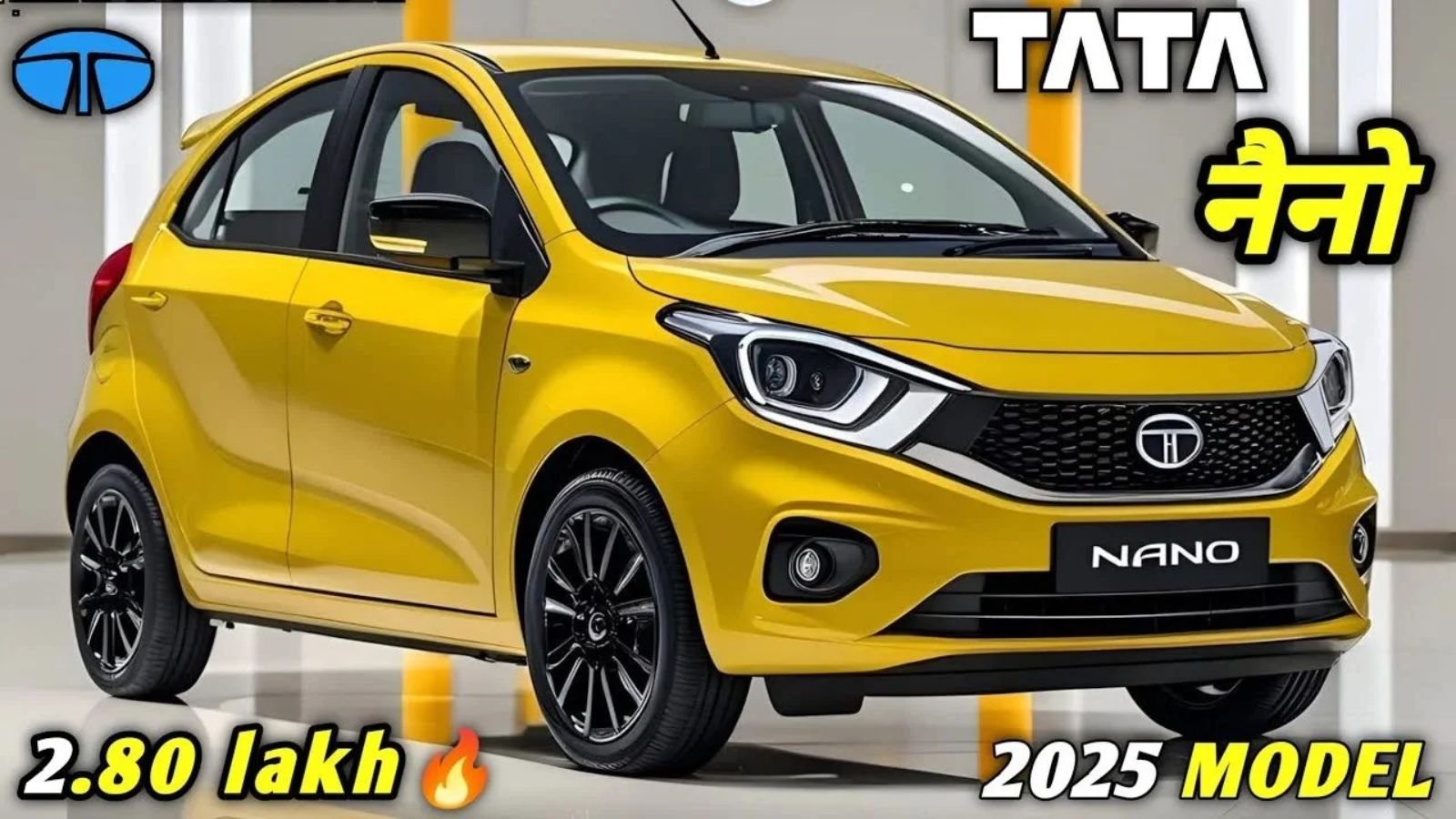
The New Tata Nano may have exited the production lines, but its spirit still echoes on Indian roads and in the memories of millions. Launched by Tata Motors in 2009, the car disrupted the auto industry not just in India but around the world. Branded as the world’s most affordable car, the New Tata Nano became a symbol of aspiration for countless families who had previously only dreamed of owning a four-wheeler. It wasn’t just a car—it was a promise that mobility could be both accessible and attainable. Though the journey of the Nano had its fair share of bumps, its place in automotive history is secure.

Why Was the New Tata Nano So Popular?
The incredible price point of the New Tata Nano was its biggest draw. At just around ₹1 lakh during its launch, the car was well within the reach of a large segment of the Indian middle class. It changed the dynamics of personal transportation, especially for families who had relied on two-wheelers for years. With its compact structure, simple design, and low maintenance costs, it checked all the boxes for urban commuting. Suddenly, car ownership was no longer reserved for the wealthy; the New Tata Nano democratized mobility.
The affordability factor wasn’t its only winning card. Its size was tailor-made for the bustling, narrow lanes of Indian cities. Maneuvering through traffic, finding parking in crowded spaces, and zipping through congested roads became easier with the Nano. It addressed urban challenges with a clever, minimalistic approach—something that endeared it to both first-time buyers and older consumers looking for a second, city-specific car.
Design and Cabin Space
Despite its compact footprint, the New Tata Nano surprised many with its interior space management. The car was a masterclass in design efficiency. It comfortably accommodated four adults, although taller passengers might have found the rear seat slightly cramped during longer drives. The tall-boy design, coupled with a relatively high roofline, gave an airy feel to the otherwise compact cabin.
From the outside, its curvy and friendly design made it stand out. The styling was intentionally kept simple, in line with its functional promise. However, this simplicity lent it a unique charm—people either loved it or dismissed it, but no one ignored it. The rear-engine layout was another unique feature that helped free up space in the front for passenger comfort.
Its build, though light, was perfect for navigating tight urban spaces. Driving the New Tata Nano felt effortless. The light steering and small turning radius made it a joy in city traffic, while the elevated driving position gave the driver a good view of the road.
Engine and City Performance
Powering the New Tata Nano was a modest 624cc, twin-cylinder petrol engine. This engine wasn’t meant for high-speed performance, but it served its core purpose of daily city commuting well. The car delivered a top speed of around 105 km/h—not suitable for highways but perfect for navigating city roads, school runs, and short-distance errands.

The rear-mounted engine was a bold engineering move. It not only saved space but also ensured better weight distribution. The result was an agile little machine that, while basic, did exactly what it was built for. In stop-and-go traffic, it was sprightly and nimble. The gear shifts were smooth, and acceleration, though not aggressive, was adequate for an entry-level commuter car.
Impressive Mileage and Fuel Efficiency
One of the primary reasons the New Tata Nano found love in Indian households was its fantastic fuel economy. Delivering anywhere between 20 to 25 kmpl, depending on the variant and driving conditions, the Nano became one of the most fuel-efficient petrol cars of its time.
At a time when fuel prices were steadily climbing, the Nano offered relief to families with tight budgets. Its fuel-sipping nature made daily commutes light on the wallet. This affordability went beyond just the price tag—it was economical to run, maintain, and repair. Routine servicing costs were minimal, and spare parts were easy to procure. For many, this was the most cost-effective introduction to the world of cars.
Features and Affordability
To keep costs down, the New Tata Nano was launched with a very basic set of features. Early versions had no air conditioning, power steering, or power windows. The focus was on delivering the essentials—an engine, four wheels, seats, and a roof. And that’s exactly what you got.
As the market evolved and customer expectations rose, Tata Motors updated later models with slightly better interiors, an air conditioner, and even a music system in higher variants. The GenX Nano, launched in the later years, even came with an AMT (Automated Manual Transmission) option—a bold move for a car in this segment.
Despite these improvements, the Nano remained minimal at heart. It wasn’t trying to compete with feature-rich hatchbacks—it was designed to be an accessible mode of transport. In doing so, it brought joy to people who never imagined owning a new car.
Why the New Tata Nano Couldn’t Sustain
While the New Tata Nano started with a bang, sustaining its success proved to be a challenge. The very aspect that made it popular—its price—also became a limitation. It was promoted as the “world’s cheapest car,” and while this was a marketing marvel, it eventually hurt its image. In a country where social status often plays a role in buying decisions, owning the “cheapest car” wasn’t something everyone wanted to flaunt.



There were also concerns about safety. Early incidents, including a few cases of the Nano catching fire, created fear among potential buyers. Although Tata Motors took corrective steps and improved the safety features, the damage to public perception had been done.
Moreover, the Indian auto market was changing. Customers wanted more from their vehicles—better features, improved comfort, enhanced safety. Competing hatchbacks started offering more value for slightly higher prices. As a result, sales of the Nano started declining, and eventually, in 2018, Tata Motors pulled the plug on its production.
Is the New Tata Nano Still a Good Option Today?
Even though the New Tata Nano is no longer being manufactured, it still finds buyers in the used car market. For someone looking for a compact, fuel-efficient, and low-maintenance car for city use, the Nano can still be a smart choice.
It’s particularly useful for students, first-time drivers, elderly users, or as a secondary vehicle for short distances. However, it’s important to be realistic about its limitations—it’s not built for highways, it lacks advanced safety features, and storage space is minimal. Yet, for budget-conscious individuals who prioritize efficiency over frills, the New Tata Nano remains a compelling option.
Maintenance costs are still low, and mechanics across the country are familiar with its structure. Spare parts are generally available, though some specific components might require a bit more effort to source. Buyers should ideally look for well-maintained units from the GenX series, which offered more features and better reliability.
Frequently Asked Questions (FAQs)
Q. How many people can the New Tata Nano seat?
The New Tata Nano is designed to comfortably seat four adults. However, rear passengers who are tall might find legroom slightly restrictive on long journeys.
Q. What’s the mileage of the New Tata Nano?
The New Tata Nano delivers impressive fuel economy, offering between 20 to 25 kmpl under ideal driving conditions. It was one of the most fuel-efficient cars of its time.

Q. Is the New Tata Nano still available in the market?
No, Tata Motors officially discontinued the New Tata Nano in 2018 due to falling sales and a shift in consumer expectations. However, it is still available in the second-hand market.
Q. Is the New Tata Nano safe to drive?
The New Tata Nano meets basic safety requirements, especially in its later versions. However, it lacks modern safety features like ABS, airbags, and crash-resistant design found in newer models.
Q. Can I use the New Tata Nano for daily commutes?
Yes, the New Tata Nano is ideal for short-distance city driving. It is easy to park, fuel-efficient, and low on maintenance—making it perfect for daily use in urban environments.
Final Thoughts
The New Tata Nano wasn’t just an automobile project—it was a mission to revolutionize personal transport in India. It succeeded in fulfilling dreams for millions, giving them their first taste of car ownership. Even though the market eventually moved past it, the impact of the New Tata Nano cannot be overstated.
It was bold, unconventional, and visionary. And while it may no longer be rolling off assembly lines, its presence still lingers in the form of nostalgia, pride, and innovation. The New Tata Nano is proof that sometimes, the smallest ideas can have the biggest impact.
Some Important Link
| Download News APP | Click Here |
| WhatsApp Group | Click Here |
| Home Page | Click Here |